
Heard County Most Wanted
The Heard County Sheriff's Office does not publish a most-wanted page. Its navigation shows no wanted list. No photo gallery, no tip form, and no Crime Stoppers program. There is no warrant-unit phone line either. A legacy Franklin page holds an old image stamped with a 2009-era date, but it sits outside the current HCSO site and cannot stand in for a real list.
So what can you do instead? Georgia offers a verified route. The Georgia warrant guidance tells you to contact the relevant sheriff with a first name, last name, and date of birth. For the local office, the HCSO contact page has the details you need.
Agency websites change often. Until HCSO posts an official list, the honest answer is that no local list exists right now, not that nobody is wanted. Any future listing should carry the agency name, an update date, a photo source, and a direct HCSO link before you treat it as real.
The official state guidance screenshot is linked as a source. It explains a warrant inquiry rather than displaying a Heard County wanted gallery. Read the Georgia warrant guidance for the current state instructions.
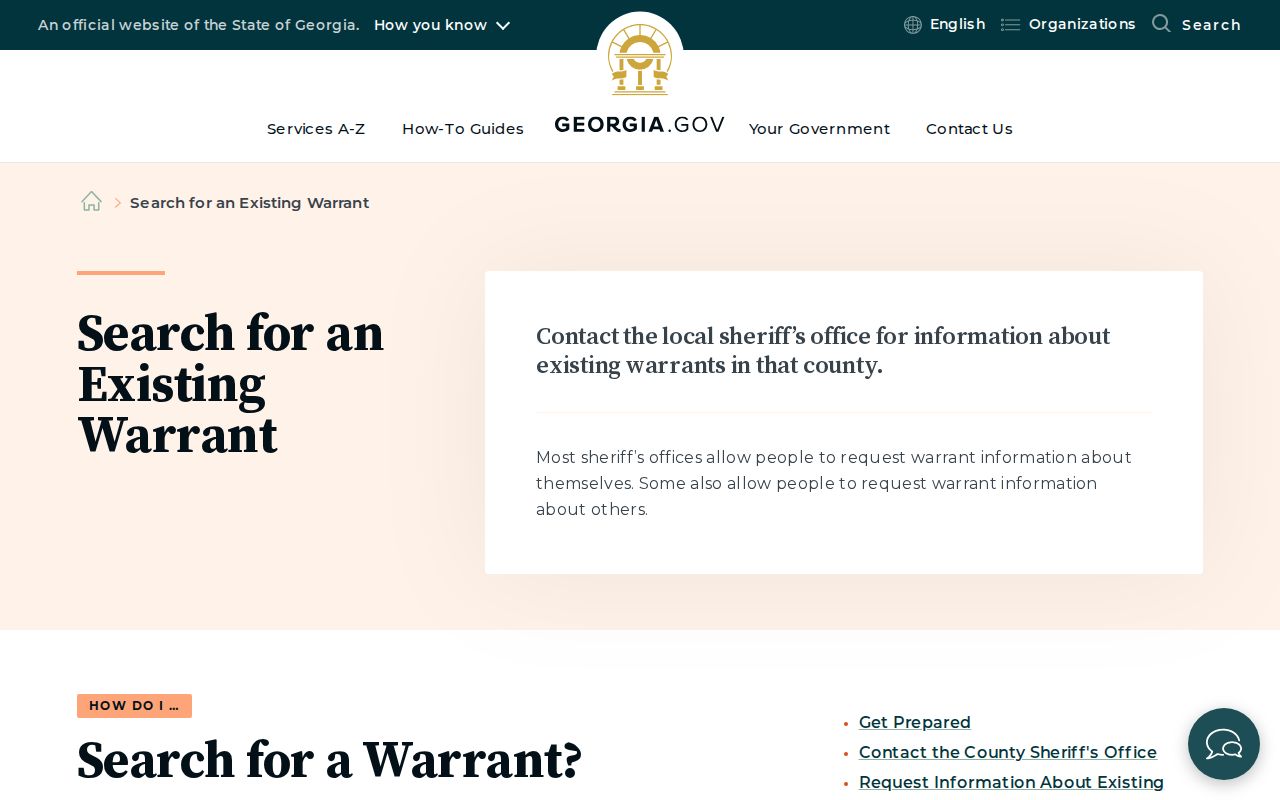
That distinction protects both the public and the person named in an allegation. No photo is rehosted or presented as a current wanted image. The official warrant page is the source for the inquiry route.
What a Heard Wanted Listing Shows
With no verified current list from HCSO, the fields below work as a checklist rather than a description of a live Heard page. Treat any future official listing as a dated agency notice, not a stand-in for the warrant file or the court docket.
| Possible field | What to verify |
|---|---|
| Agency and date | Which office posted the item and when the page was last updated. |
| Name and identifiers | Full name, date of birth, aliases, or other identifiers that reduce a namesake error. |
| Photo | Whether the image is an official agency image and whether it is still current. |
| Warrant basis | The type of warrant or charge, without treating it as a conviction. |
| Last known information | Any agency-provided area or date, never an invitation to confront someone. |
| Report instructions | The verified phone, tip route, or emergency direction supplied by law enforcement. |
None of these fields can be filled from the old 2009 image. Unofficial search results won't do it either. An aggregator archive is not an HCSO wanted list. A surname match in another Georgia county is not local coverage.
Check Heard County Warrants
Georgia's official route is simple. Inquire directly with the sheriff for the county where the warrant may exist. Have a first name, last name, and date of birth ready. Practices vary from office to office. Some answer warrant questions by phone. Others want you to come in person. The check itself costs nothing. Be aware, though, that walking into an office with an active warrant can end in an arrest.
- Confirm that Heard County is the right jurisdiction. A different county or court may hold a separate process.
- Prepare the person's full first and last name and date of birth. Use extra identifying details to reduce a namesake mistake.
- Contact HCSO at 706-675-3329 and ask how the office handles a warrant-status inquiry. Do not assume the telephone line supplies a full case file.
- If the office directs a person to appear, understand the arrest risk described by Georgia's guidance. A person checking their own status should speak with a lawyer or the appropriate court before taking action.
- For court records, compare the Heard Superior Court clerk and Magistrate Court routes. A warrant application, first appearance, or bond setting is not a final disposition.
The HCSO page lists 706-675-3329 for the sheriff and jail. Another number, 706-675-3328, handles county non-emergency dispatch. Call 911 for an immediate threat. Anything less urgent goes to law enforcement, not to a public confrontation with someone you suspect.
Heard County Warrant Types
The record label matters, but no public Heard warrant portal exists to fill these fields online. Ask the sheriff or the court which document is on file and whether it is still active.
| Record type | Plain-language distinction |
|---|---|
| Arrest warrant | A legal process authorizing an arrest based on an charge. It does not decide guilt. |
| Bench warrant | A court-issued process connected to a court matter. Confirm the issuing court and current status. |
| Warrant application | A request made to a court, including the officer or citizen applications described for Heard Magistrate Court. An application is not the same as a final case disposition. |
| Out-of-county process | A warrant or court action from another jurisdiction. Heard HCSO may not have the full record. |
A record label is not a prediction of arrest, release, or a court outcome. Stick to the exact agency and case language. Then ask a lawyer or the issuing court about the next lawful step.
Wanted List vs Heard Warrant Check
A most-wanted list is selective by design. An agency picks certain people for a public appeal, often with a photo and tip instructions. A warrant check is different. It is a private status inquiry about one person. Most active warrants never make a curated list, and a missing entry clears no one.
Heard has a documented official route for the second task but no current example of the first. Skip the legacy 2009 Franklin image as a list. And do not assume someone is wanted based on a commercial archive, an undated social post, or a news story lacking a current warrant source.
Heard County Tip and Safety Route
HCSO publishes no anonymous tip form, no Crime Stoppers program, no reward policy, and no warrant-focused social feature. No reward amount or anonymity promise can be stated here without inventing something local. Use the contact route HCSO actually publishes.
Heard County Sheriff's Office
11820 Highway 100 North
Franklin, GA 30217
706-675-3329
Non-emergency dispatch: 706-675-3328
Emergency: 911
The contact screenshot is linked to the official HCSO source. It is a contact fallback, not a wanted-person gallery or a claim that the office has a public tip program. Confirm the phone and address on the current HCSO contact page.
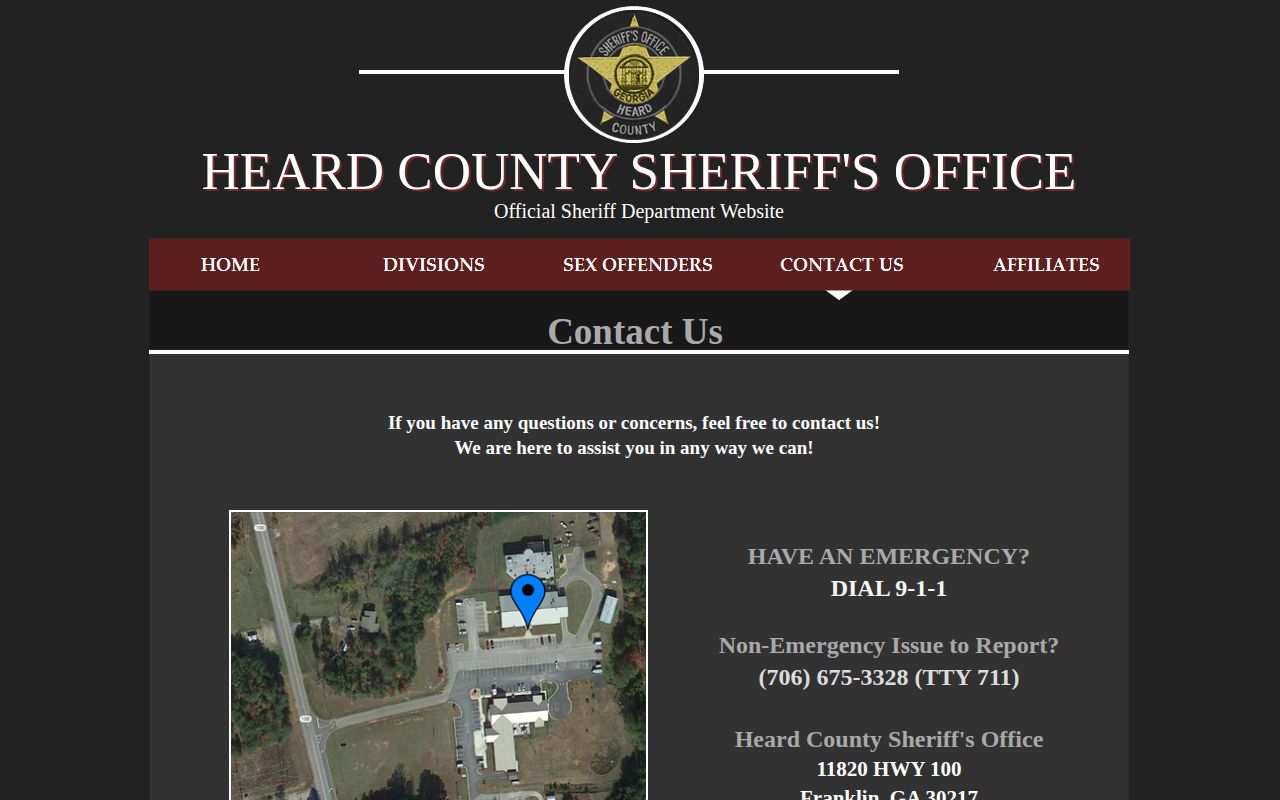
Anyone with a safety concern should let trained officers handle it. The safest useful detail is the location, time, and conduct that prompted the report, not an attempt to make a private arrest. No HCSO inmate app or warrant-focused social feature was verified, and Pay Tel Connect is only a video-visitation service. The HCSO contact source remains the local routing point.
Heard County Court Warrant Records
Warrant records at the courthouse level start with the Clerk of Superior Court. That office sits at 215 East Square, P.O. Box 249, Franklin, GA 30217, and answers the phone at 706-675-3301. Doors are open weekdays from 8:30 a.m. to 5 p.m. For locating superior-court matters, the official clerk page works, and so does the Georgia Courts e-access gateway. The gateway hands you off to an outside provider, and that provider may ask you to create an account.
Magistrate Court lists its directory number as 706-675-3002. A 2026 county notice assigns that court two jobs: processing warrant applications from officers and from citizens, and keeping the criminal files. Whenever you pull a court record, verify it belongs to the right person. Match the full name, the case number, the filing date, the court, and a date of birth when one is lawfully available.
A warrant application or bench warrant is just one procedural step on paper. The docket entries that follow tell the rest of the story, and they must be read on their own.
Missing results happen. When the e-access search comes up thin, call the clerk and give the court name, the case number, and the date you searched. A blank entry can mean the case sits in a different court, a name was spelled differently, the provider limited your account, or the file only opens in person. Compare what the clerk has with what HCSO reports on custody rather than blending the two into one answer.
GDC and Federal Custody Checks
A Heard warrant question can lead to a different custody system. If a person has been sentenced to Georgia prison, the Georgia Department of Corrections locator covers the state-correctional profile, not the county warrant history. GDC photos may be missing, and a same-name profile is not proof of identity.
For a federal inmate, use the Bureau of Prisons locator. For civil immigration detention, use ICE's locator. Neither is a Heard County wanted list, and neither public interface is a county booking-photo archive.
The BOP source image illustrates a federal locator's scope. It does not show a Heard County wanted person or establish a local warrant. Open the official BOP locator for federal custody only.
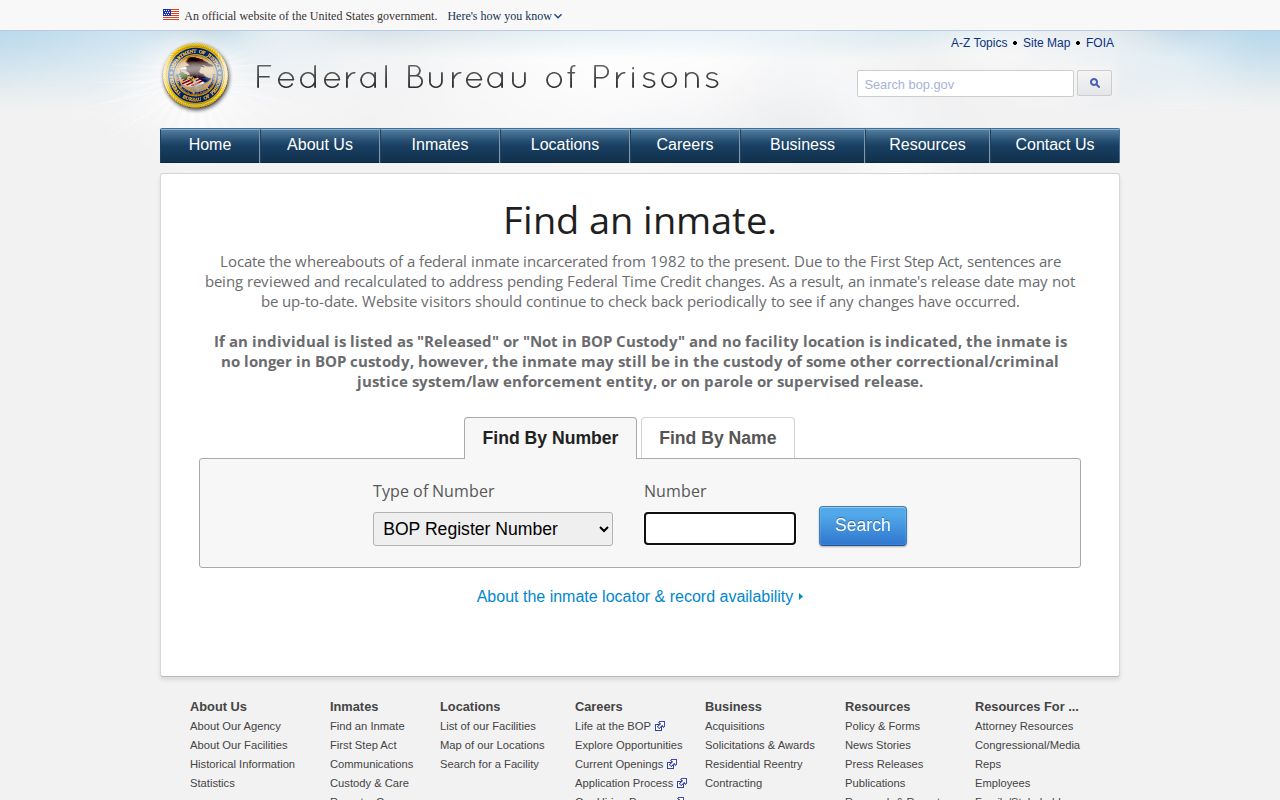
Keep county, state-prison, federal criminal, and civil immigration records in separate columns when checking a name. The BOP source cannot answer a Heard County warrant question.
Heard County Booking Follow-Up
A warrant inquiry and a booking record answer different questions. When someone has been booked in Heard County, the county booking and records path helps. It shows how to call HCSO, request a record under a specific name, and track the matter into court. One caution applies. A person released earlier may already be out of the jail by the time you ask.
Write down what you find. Note the source, the date, the jurisdiction, and the case number. That short paper trail keeps a current custody answer apart from an old news story, a stale archive, or a court entry that has since changed.